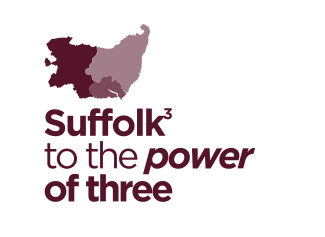
Proposed Council Boundaries
Suffolk’s three largest towns are Ipswich, Lowestoft and Bury St Edmunds. There are another 15 towns and villages with populations of more than 5,000 people in Suffolk. The largest towns act as hubs for large institutions like colleges and public sector agencies, including the current councils’ main offices.
Given the distance between these towns, there’s little crossover for the communities they serve. Those in or close to Lowestoft are unlikely to regularly travel to Bury St Edmunds or Ipswich for their leisure time, or to access public services for example.
There is one council proposed for Western Suffolk, one council proposed for Central & Eastern Suffolk, and one council proposed for Ipswich and Southern Suffolk.

Western Suffolk
A diverse and historic identity, anchored around Bury St Edmunds, with strong market towns and villages, special natural environments, a large military community, and a business sector that ranges from the home of horseracing to agriculture, food and drink, tourism, life sciences and advanced manufacturing alongside close ties to the Cambridge Region.
Ipswich & Southern Suffolk
A dynamic gateway to heritage, commerce, and culture. Anchored by the historic county town of Ipswich and the UK’s largest container port at Felixstowe, this area is a powerhouse of maritime legacy and economic vitality. It boasts rich cultural assets, vibrant urban centres, and strategic connectivity via the A14 economic corridor. With a unique blend of history, innovation, and opportunity, Ipswich and Southern Suffolk is primed for growth and investment.
Central & Eastern Suffolk
From the heart to the coast of Suffolk, sustainably powering and feeding the country. Networked market towns, coastal and rural landscape with significant urban hubs in Lowestoft (Suffolk’s second largest town) and the gateways of Stowmarket and Woodbridge; rooted in agricultural, natural and coastal heritage with a strong cultural, environmental and traditional tourism offer. Driving the economy and opportunity in Suffolk and nationally, from nuclear energy at Sizewell C, to innovation, growth and skills at the Gateway 14 Freeport site in Stowmarket.
Government guidance says that new council areas need to:
Be sensible economic areas
with an appropriate tax base that does not create an undue advantage or disadvantage to any area
Be sensible geographies
that help to increase housing supply and meet local needs
Have a clear rationale
with a strong and well-explained case that reflects the needs and identity of the area
The Three Unitary Councils For Suffolk approach has considered a range of factors when designing new council footprints:
Community Identity and Relationships
We have used parishes as the building blocks for boundary proposals and considered the relationship between parishes and towns
Characteristics of Different Areas
In terms of their economic activities, land use, population density, diversity, and histories
Travel to Work, School and Leisure Patterns
We have looked at public transport and road networks, school catchments and access to leisure activities
The Tax Base
To ensure that there is sufficient revenue for council tax and business rates to provide services
Demand For Statutory Services
To ensure that there is sufficient capacity to meet the need for services such as Adult Social Care, Special Educational Needs, and Homelessness
Balanced The Population
So that each new council serves a similar sized population and can deliver on the housing growth already set out in Local Plans